Trending News:Kentucky Town 254 in Kenya: Will the real price go beyond the fun, flavours and fashion?Studio D’Maxsi celebrates 20 years of iconic fashion, design and philanthropyMarriage rate declines to all time low in England and WalesJustFor.fans Launches Fentanyl Test Strip Initiative to Combat Overdose CrisisExclusive: Eberechi Eze Ready for Next Step in His CareerMeet the winners of the Global Creative Graduate Showcase 2024.Autumn Statement could derail property market positivityCEO Stories: Kerry Boland Founder of The Growth Coaching CollectiveCEO Stories: Designer Martin Dean Cracks the Code on Women’s TrainersDownsizers competing over a limited supply of park homesCoastal House Prices Surge Despite Wider National Stagnation7 Reasons Your Property Is Struggling to Sell – Open Property Group Insight RevealsStephen Lawrence Day: Baroness Doreen Lawrence OBE to issue certificates to 44 successful Black Entrepreneurs at SOAS “Ain’t I a Woman?”: Satire Tackles Racism & Sexism Faced by Black WomenBFC/Vogue Designer Fashion Fund Winner Announced!South Devon College’s Last-Minute Christmas IdeasFrom Bond to Reality TV: “007: Road To A Million” Sparks Excitement for Season 22024 beauty hacks: a focus on natural radianceZim Cyber City: Africa’s New Frontier for InvestmentEmbrace the Festive Spirit with the Enchanting Charm of Forest GreenLSB Ethnic minority business lending Report: Bridging the Finance Gap Logility buys Garvis, an AI forecasting startup1st Annual UK Caribbean Food Awards Now Open for EntriesNBA Africa and Egyptian Real Estate Developer MAVEN Announce Multiyear PartnershipComplete list of players participating in the 19th BWB Africa campHeat’s Adebayo, Cavaliers’ Garland, Warriors’ Kuminga and Magic’s Suggs to Coach Top Prospects at Basketball Without Borders Africa 2023A Couple shares their experience fostering children and raising their ownHigh-Speed train from Rome to PompeiiRita Ora’s New Album You & I Just Dropped – Listen!South Africa’s Nasty C and Philippine’s Zack Tabudlo New Single “Fallin’” with Coke Studio™Banyan Tree Group’s Growth Soars: 70th Property Milestone Reached with Vietnam and Japan OpeningsCurio Collection by Hilton: Lindian Village Beach Resort Rhodes Debuts on the Greek IslandTeenager’s Revolutionary Kitchenware Smashes Funding GoalsSandton City spearheads the integration of AI in Future Icons campaignAlcohol Awareness: Cost-of-living Crisis Driving Up Alcohol DependenceSupply chain expert comments on Fed’s decision to keep rates on holdLaguna Wellness: A Cutting-Edge Addition To Bangkok Dusit Medical Services NetworkNigeria’s Hilda Baci is officially a Guinness World Record holder, awarded 93 hours 11 minutesMarriott International announces further African expansion under its Protea Hotels by Marriott brandJustin Cassin showcases his AW24 collection at London Fashion WeekTourism: sustainability is the trend of 2023, according to the latest dataSupply chain specialists OCI comments on the supply chain implications of the Atlantic DeclarationOliver Chapman, CEO of OCI’s comments on the supply chain implications of the latest inflation dataDestination, Oman – The dreamiest honeymoon hotels in OmanMen’s Health Week: Physical exercises men of all ages can do to improve their mental healthPutin’s war in Ukraine: A repeat of Peloponnesian war in this 21st Century?Top Tips on How To Have Better Relationships – Campaign Against Living Miserably Entrepreneurs Stories: High School Dropout To a Multi-Million Pounds Entrepreneur -Jake Munday.LIVVE: Leeds entrepreneur launches online pharmacy set to lead the menopause revolutionThe Power of Alcohol on Our Lives: When is Drinking A Problem?Leading By Example: Royal Leaders in Men’s Mental & Emotional Health.Zyler – A Smart Technology That Lets You Have You Clothing Fitted Virtually.COVID-19’s Legacy of Mental Health Problems – Therapist, Lee Hawker Weighs In.The Male Menopause: Myth or Midlife Crisis? 10 Tips For Building Strong Mental Health In Children- Noel McDermott.Shocking: Neyo’s Wife Accuses Singer Of Infidelity in Their 8-year Marriage.Afro Nation Returns Home to Ghana In December After a Successful Portugal Outing This July.Psychotherapist Warns Current Political Climate Could Increase Anxiety, Gives Coping Tips.Miss Pride of Africa UK Pageant Returns Search For New Queens Opens.The Queen Of England Wants Camilla To Become Queen Consort when Charles Becomes king.100 Most Influential Creatives 2021: Nnamdi Kanu.100 Most Influential Creatives, 2021.Arsenal’s 5 finest Academy Graduates Who Are Still With The ClubCouncillor Paul Nickerson to pay damages To Rt Hon.Jeremy Corbyn after His Defamatory Remarks.One Comic Book At a Time, Chika Nwaogu Is On A Mission To Eradicate Period Poverty And StigmaF1 Championship: Lewis Hamilton and Max Verstappen in Possible Dramatic Tie-Breaker This Season.Is Aminata Diallo a Victim of Targeted Racism or Guilty of Violence as assumed?British Artist, Sheila Paul Creates Realistic Dolls To Help In Dementia And Mental Health Therapy.Somber Reflections As Nigerians Mourn on the Country’s 61st Independence.Daniel Craig, Halle Berry, Top List Of The 007 Stars People Most Want To ‘Bond’ With.Two In Five Women Would Trade Their Husbands For BOND. Survey Finds.London budding filmmaker, 25, Chinaza Onyechi awarded a MetFilm School Scholarship Worth £54,000.Abuja Flooding: 5 feared dead as Flood Ravages an Estate in Nigeria’s Capital, Abuja.Business: Intuit To Acquire Mailchimp In A Massive Expected $12 Billion Deal.Daniil Medvedev ends Novak Djokovic’s historic dream of Winning all four Grand Slam tournaments this year.Staying On Top: The three Big Challenges A Startup Must Conquer.British Teenager Emma Raducanu wins a Grand Slam title 44 years After Virginia Wade.Arsenal FC signs Nigeria’s 9-year-old Munir Sada.Jean-Pierre Adams Former French Defender Dies after nearly 40years in Coma.Cristiano Ronaldo Clinches The Highest Goalscorer Of All Time After Scoring His 111 Goals.The Real Reason Sisters, Serena and Venus Williams And Other Stars Are Pulling Out Of US Open.Senegal Wins Brazil to become the first African Nation to reach the FIFA BEACH Soccer World Cup Semi-Final.Singapore Debunks False message circulating about an alleged COVID-19 patient autopsy.Nigeria’s D’Tigers See Off Mali in their First Afrobasket Tournament Game.Six Reasons Smart People Make Bad Decisions Both In Their Corporate and Private Lives.Supercop Abba Kyari Implicated in Hushpuppi Case, Wanted In The USA.5 Ways Entrepreneurs Can Creatively Inspire Business Growth In Challenging Times.Proof of Vaccination Required to Enter Nightclubs From End Of September.Italy are Euros 2020 Champions But How Did They Win It?Euros 2020 Final: England’s Heartbreak. What Went Wrong?Nigeria Stuns USA in a Basketball Exhibition Game against the 2021 Olympics Tournament.England Vs Italy Euros Final: Key Players Italy Must Be Wary of, Predictions – The LineUp, The Winners.African Digital Content Distribution Company, Publiseer Ventures Into Music Licensing.African Mini Football Competition Opening Match – Nigeria V Libya, Goalless.Wimbledon 2021: Ashleigh Barty Wins her First-Ever Wimbledon Title.Copa America: Argentina Wins For The First Time in 28 years, Messi Wins First Senior International Trophy.IPOB Leader, Nnamdi Kalu Arrested And Sent Back To Nigeria.Breaking: Nigeria Suspends Twitter In The Country IndefinitelyBreaking: Nigeria Government Suspends Twitter In The Country IndefinitelyBook Review: The Jensons by 13-year-old, Chelsea Anyanwu.
Trending News:Kentucky Town 254 in Kenya: Will the real price go beyond the fun, flavours and fashion?Studio D’Maxsi celebrates 20 years of iconic fashion, design and philanthropyMarriage rate declines to all time low in England and WalesJustFor.fans Launches Fentanyl Test Strip Initiative to Combat Overdose CrisisExclusive: Eberechi Eze Ready for Next Step in His CareerMeet the winners of the Global Creative Graduate Showcase 2024.Autumn Statement could derail property market positivityCEO Stories: Kerry Boland Founder of The Growth Coaching CollectiveCEO Stories: Designer Martin Dean Cracks the Code on Women’s TrainersDownsizers competing over a limited supply of park homesCoastal House Prices Surge Despite Wider National Stagnation7 Reasons Your Property Is Struggling to Sell – Open Property Group Insight RevealsStephen Lawrence Day: Baroness Doreen Lawrence OBE to issue certificates to 44 successful Black Entrepreneurs at SOAS “Ain’t I a Woman?”: Satire Tackles Racism & Sexism Faced by Black WomenBFC/Vogue Designer Fashion Fund Winner Announced!South Devon College’s Last-Minute Christmas IdeasFrom Bond to Reality TV: “007: Road To A Million” Sparks Excitement for Season 22024 beauty hacks: a focus on natural radianceZim Cyber City: Africa’s New Frontier for InvestmentEmbrace the Festive Spirit with the Enchanting Charm of Forest GreenLSB Ethnic minority business lending Report: Bridging the Finance Gap Logility buys Garvis, an AI forecasting startup1st Annual UK Caribbean Food Awards Now Open for EntriesNBA Africa and Egyptian Real Estate Developer MAVEN Announce Multiyear PartnershipComplete list of players participating in the 19th BWB Africa campHeat’s Adebayo, Cavaliers’ Garland, Warriors’ Kuminga and Magic’s Suggs to Coach Top Prospects at Basketball Without Borders Africa 2023A Couple shares their experience fostering children and raising their ownHigh-Speed train from Rome to PompeiiRita Ora’s New Album You & I Just Dropped – Listen!South Africa’s Nasty C and Philippine’s Zack Tabudlo New Single “Fallin’” with Coke Studio™Banyan Tree Group’s Growth Soars: 70th Property Milestone Reached with Vietnam and Japan OpeningsCurio Collection by Hilton: Lindian Village Beach Resort Rhodes Debuts on the Greek IslandTeenager’s Revolutionary Kitchenware Smashes Funding GoalsSandton City spearheads the integration of AI in Future Icons campaignAlcohol Awareness: Cost-of-living Crisis Driving Up Alcohol DependenceSupply chain expert comments on Fed’s decision to keep rates on holdLaguna Wellness: A Cutting-Edge Addition To Bangkok Dusit Medical Services NetworkNigeria’s Hilda Baci is officially a Guinness World Record holder, awarded 93 hours 11 minutesMarriott International announces further African expansion under its Protea Hotels by Marriott brandJustin Cassin showcases his AW24 collection at London Fashion WeekTourism: sustainability is the trend of 2023, according to the latest dataSupply chain specialists OCI comments on the supply chain implications of the Atlantic DeclarationOliver Chapman, CEO of OCI’s comments on the supply chain implications of the latest inflation dataDestination, Oman – The dreamiest honeymoon hotels in OmanMen’s Health Week: Physical exercises men of all ages can do to improve their mental healthPutin’s war in Ukraine: A repeat of Peloponnesian war in this 21st Century?Top Tips on How To Have Better Relationships – Campaign Against Living Miserably Entrepreneurs Stories: High School Dropout To a Multi-Million Pounds Entrepreneur -Jake Munday.LIVVE: Leeds entrepreneur launches online pharmacy set to lead the menopause revolutionThe Power of Alcohol on Our Lives: When is Drinking A Problem?Leading By Example: Royal Leaders in Men’s Mental & Emotional Health.Zyler – A Smart Technology That Lets You Have You Clothing Fitted Virtually.COVID-19’s Legacy of Mental Health Problems – Therapist, Lee Hawker Weighs In.The Male Menopause: Myth or Midlife Crisis? 10 Tips For Building Strong Mental Health In Children- Noel McDermott.Shocking: Neyo’s Wife Accuses Singer Of Infidelity in Their 8-year Marriage.Afro Nation Returns Home to Ghana In December After a Successful Portugal Outing This July.Psychotherapist Warns Current Political Climate Could Increase Anxiety, Gives Coping Tips.Miss Pride of Africa UK Pageant Returns Search For New Queens Opens.The Queen Of England Wants Camilla To Become Queen Consort when Charles Becomes king.100 Most Influential Creatives 2021: Nnamdi Kanu.100 Most Influential Creatives, 2021.Arsenal’s 5 finest Academy Graduates Who Are Still With The ClubCouncillor Paul Nickerson to pay damages To Rt Hon.Jeremy Corbyn after His Defamatory Remarks.One Comic Book At a Time, Chika Nwaogu Is On A Mission To Eradicate Period Poverty And StigmaF1 Championship: Lewis Hamilton and Max Verstappen in Possible Dramatic Tie-Breaker This Season.Is Aminata Diallo a Victim of Targeted Racism or Guilty of Violence as assumed?British Artist, Sheila Paul Creates Realistic Dolls To Help In Dementia And Mental Health Therapy.Somber Reflections As Nigerians Mourn on the Country’s 61st Independence.Daniel Craig, Halle Berry, Top List Of The 007 Stars People Most Want To ‘Bond’ With.Two In Five Women Would Trade Their Husbands For BOND. Survey Finds.London budding filmmaker, 25, Chinaza Onyechi awarded a MetFilm School Scholarship Worth £54,000.Abuja Flooding: 5 feared dead as Flood Ravages an Estate in Nigeria’s Capital, Abuja.Business: Intuit To Acquire Mailchimp In A Massive Expected $12 Billion Deal.Daniil Medvedev ends Novak Djokovic’s historic dream of Winning all four Grand Slam tournaments this year.Staying On Top: The three Big Challenges A Startup Must Conquer.British Teenager Emma Raducanu wins a Grand Slam title 44 years After Virginia Wade.Arsenal FC signs Nigeria’s 9-year-old Munir Sada.Jean-Pierre Adams Former French Defender Dies after nearly 40years in Coma.Cristiano Ronaldo Clinches The Highest Goalscorer Of All Time After Scoring His 111 Goals.The Real Reason Sisters, Serena and Venus Williams And Other Stars Are Pulling Out Of US Open.Senegal Wins Brazil to become the first African Nation to reach the FIFA BEACH Soccer World Cup Semi-Final.Singapore Debunks False message circulating about an alleged COVID-19 patient autopsy.Nigeria’s D’Tigers See Off Mali in their First Afrobasket Tournament Game.Six Reasons Smart People Make Bad Decisions Both In Their Corporate and Private Lives.Supercop Abba Kyari Implicated in Hushpuppi Case, Wanted In The USA.5 Ways Entrepreneurs Can Creatively Inspire Business Growth In Challenging Times.Proof of Vaccination Required to Enter Nightclubs From End Of September.Italy are Euros 2020 Champions But How Did They Win It?Euros 2020 Final: England’s Heartbreak. What Went Wrong?Nigeria Stuns USA in a Basketball Exhibition Game against the 2021 Olympics Tournament.England Vs Italy Euros Final: Key Players Italy Must Be Wary of, Predictions – The LineUp, The Winners.African Digital Content Distribution Company, Publiseer Ventures Into Music Licensing.African Mini Football Competition Opening Match – Nigeria V Libya, Goalless.Wimbledon 2021: Ashleigh Barty Wins her First-Ever Wimbledon Title.Copa America: Argentina Wins For The First Time in 28 years, Messi Wins First Senior International Trophy.IPOB Leader, Nnamdi Kalu Arrested And Sent Back To Nigeria.Breaking: Nigeria Suspends Twitter In The Country IndefinitelyBreaking: Nigeria Government Suspends Twitter In The Country IndefinitelyBook Review: The Jensons by 13-year-old, Chelsea Anyanwu.
Running from October 20 to November 15, 2026, Kentucky Town 254 has landed in Kenya, marking the East African debut of KFC’s global pop-up and customisation platform. Originally born in South Africa, the concept blends local street culture, fashion, and live entertainment within a multinational corporate footprint.
While social media feeds and commercial hubs buzz with excitement, a closer look reveals a far more complex narrative unfolding on the ground. This four-week festival sits right at the intersection of cultural validation, economic calculation, environmental sustainability, and the ongoing political consciousness of Kenya’s youth.
The seduction of cultural localisation
On the surface, Kentucky Town feels like a celebration tailored specifically to Nairobi’s pulse. For urban youth, it represents a nod to cultural validation. Rather than simply rolling out standard Western menus, the brand has adapted to the local palate, creating hyper-local fusions like the Colonel’s Mandazi Burger, Mandazi Pops, Kentucky Choma Burger, and Samosa Crunch. It is a stark example of a global corporate titan bending its knee to local street staples to maintain regional relevance.
The pop-up positions itself as a lifestyle sanctuary. Young Nairobians flow through the turnstiles, swapping digital receipts for entry tickets. They gather around racks of limited-edition streetwear co-created with local fashion house home_254, where clean lines and local identity are hand-printed on heavyweight cotton. Content creators balance phones on ring lights, capturing the moment under neon glow.
Yet, this experience carries an implicit filter. Because entry requires presenting a valid purchase receipt, the core celebration remains gated around middle-to-upper-income urban consumers who frequent Nairobi’s commercial retail districts, highlighting the divide in consumer purchasing power.
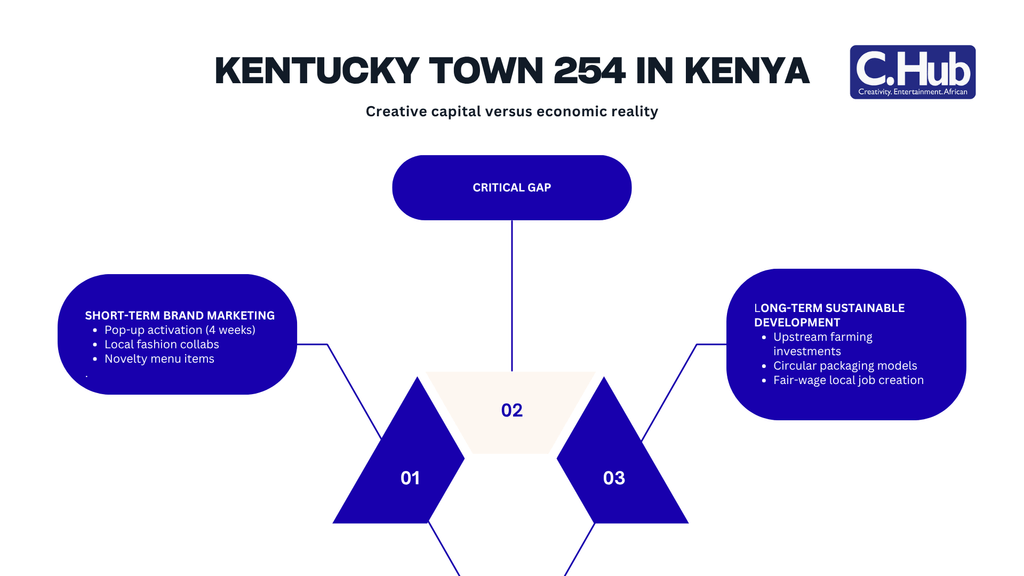
Creative capital versus economic reality
When corporate marketing budgets pour into the city, the immediate economic wins are tangible. Partnering directly with local designers like home_254, graphic artists, event producers, and digital creators, ensures that a portion of the campaign’s promotional spend circulates directly within Kenya’s creative economy rather than being spent on imported promotional goods. Malls and retail centers enjoy a weekend surge in foot traffic, and temporary gig contracts offer quick cash for event staff, security, and hospitality workers.
However, when measured against long-term Sustainable Development Goals; such as Decent Work (SDG 8) and Responsible Consumption (SDG 12); the high-energy festival reveals structural limits.
A four-week marketing push does not inherently fix deep agricultural bottlenecks. Historically, multinational QSRs in East Africa have faced challenges in integrating local smallholder farmers into their primary supply chains, often relying on imported inputs for processing-grade potatoes and standardised ingredients.
Without long-term, systemic sourcing contracts for local farmers, the agricultural benefits remain modest. Furthermore, as high-volume pop-ups generate mountains of single-use packaging and push ultra-processed, calorie-dense foods into growing urban centers, issues around public health (SDG 3) and circular waste management demand more than short-term enthusiasm.
The activist dilemma
Co-optation, ‘bread and circuses’ and political stigma
The most sensitive dimension of Kentucky Town’s arrival lies in its timing and political context. Just miles away from these vibrant shopping plazas lie streets that were filled with tear gas and chanting crowds during the youth-led Gen Z protests born in June 2024.
For a generation that took to the streets demanding governance accountability, anti-corruption reforms, and economic relief, the sudden appearance of a massive, corporate-sponsored youth festival raises immediate skepticism among civic leaders. From an activist perspective, the activation looks suspiciously like a pacification strategy; a modern iteration of ‘bread and circuses’.
By capturing street culture, urban fashion, and local music, the very cultural medium that fueled civic agitation, and redirecting it toward commercial consumption, corporate pop-ups risk diluting political momentum.
Moreover, activists recall how conservative politicians previously attempted to dismiss young protesters as “privileged, KFC-eating, Uber-riding city dwellers” to delegitimise their demands. A high-profile fast-food spectacle risks reinforcing that exact stereotype, painting politically conscious youth as superficial consumers.
From the corporate desk of operators like Kuku Foods, however, the picture looks strictly commercial. Kentucky Town is pre-planned global intellectual property, scheduled months in advance to maximise Q4 retail revenue. Multinationals operate on calendars of business continuity and political neutrality, seeking foot traffic rather than political commentary.
Reclaiming agency
Enjoy the space and retain the stance
Can commercial culture and civic agitation coexist? History suggests that a four-week festival cannot extinguish a genuine generational movement. The key lies in how Kenyan youth choose to navigate the space.
To ensure events like Kentucky Town do not become a political opiate, local populations and creators are exercising subtle, effective agency:
Compartmentalising Leisure and Duty: Attending a concert or buying a collaborative hoodie does not erase political consciousness. Young consumers are rejecting the false narrative pushed by critics, proving they can enjoy a social venue on Saturday while continuing to demand government accountability on Monday.
Subversive Civic Action: Local designers and artists working within corporate platforms can embed subtle civic pride, messaging, and identity into their creations, using multinational dollars to fund their own artistic independence. Furthermore, the high density of young people at these venues creates organic spaces for networking and community building.
Economic Empowerment with Accountability: Rather than settling for one-off gig work, local creators and gig workers are pushing for fair compensation and long-term value, using corporate budgets to build personal financial resilience. Simultaneously, consumer groups have the leverage to demand structural accountability, insisting that foreign brands back up their marketing with transparent local farm sourcing and compostable packaging.
Kentucky Town 254 is a masterclass in modern, culturally aligned corporate branding. It offers undeniable short-term energy, creative opportunities, and economic injections for Nairobi’s urban retail ecosystem.
Yet, a four-week spectacle cannot stand in for genuine sustainable development, nor can it quiet the persistent demand for better governance. As the music fades and the red canopies are packed away in mid-November, the true measure of Kenya’s youth will remain unchanged.
Can the youths of Kenya show they can take the best of what global culture has to offer, extract economic value for their own, and still keep their eyes firmly set on the future of their nation?
Faustina Anyanwu is a features writer focusing on people's stories, entrepreneurship, start-ups, social media marketing, and profiling.
Follow her on Twitter - @fauntee
Official Website: www.faunteebon.com
Mantra: Real Women Think Legacy.
Studio D’Maxsi celebrates 20 years of iconic fashion, design and philanthropy
Afua is a self-taught, globally awarded designer who started off with a single sewing machine, an immigrant who has built a fashion house internationally known for its distinctive, timeless, and elegant designs.
Marriage rate declines to all time low in England and Wales
England & Wales, alongside much of the world, have seen a visible shift away from what might be considered patriarchal traditions. Many couples now see marriage not as an obligation, but as a personal choice grounded in individual preferences rather than societal expectations. When outside expectation is removed from the equation, it makes sense that some couples who would previously have married are now choosing not to.

 Faustina Anyanwu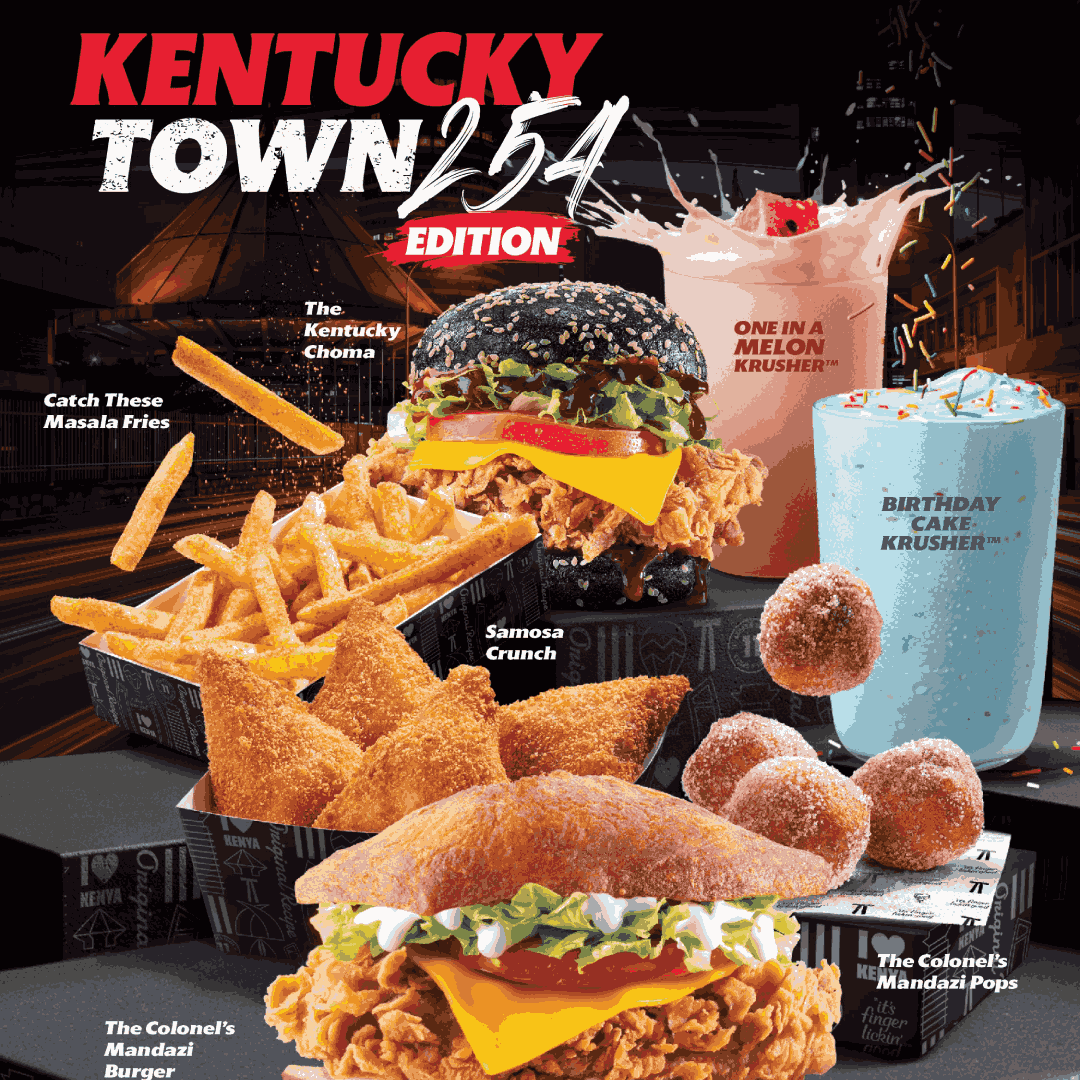








 admin
admin





Comment